
When we think about exercise, we often picture an hour at the gym, a long run, an intense cycling class, or a carefully planned strength-training session. If we do not have enough time for a “real workout,” it can be tempting to decide that exercising simply is not going to happen that day. However, movement does not have to be long, complicated, or exhausting to contribute to better health. One of the simplest habits you can add to your day may be something you have been doing since you were a toddler: walking.
A 10-minute walk may not feel impressive enough to count as exercise, but those minutes can add up over the course of a day and week. Walking requires no gym membership, complicated equipment, or elaborate preparation, and it can be adapted to nearly every fitness level. It can happen outside, on a treadmill, through the hallways at work, or even around a store when the weather is less than ideal. More importantly, research continues to demonstrate that accumulating more steps and interrupting prolonged periods of sitting are associated with meaningful health benefits.
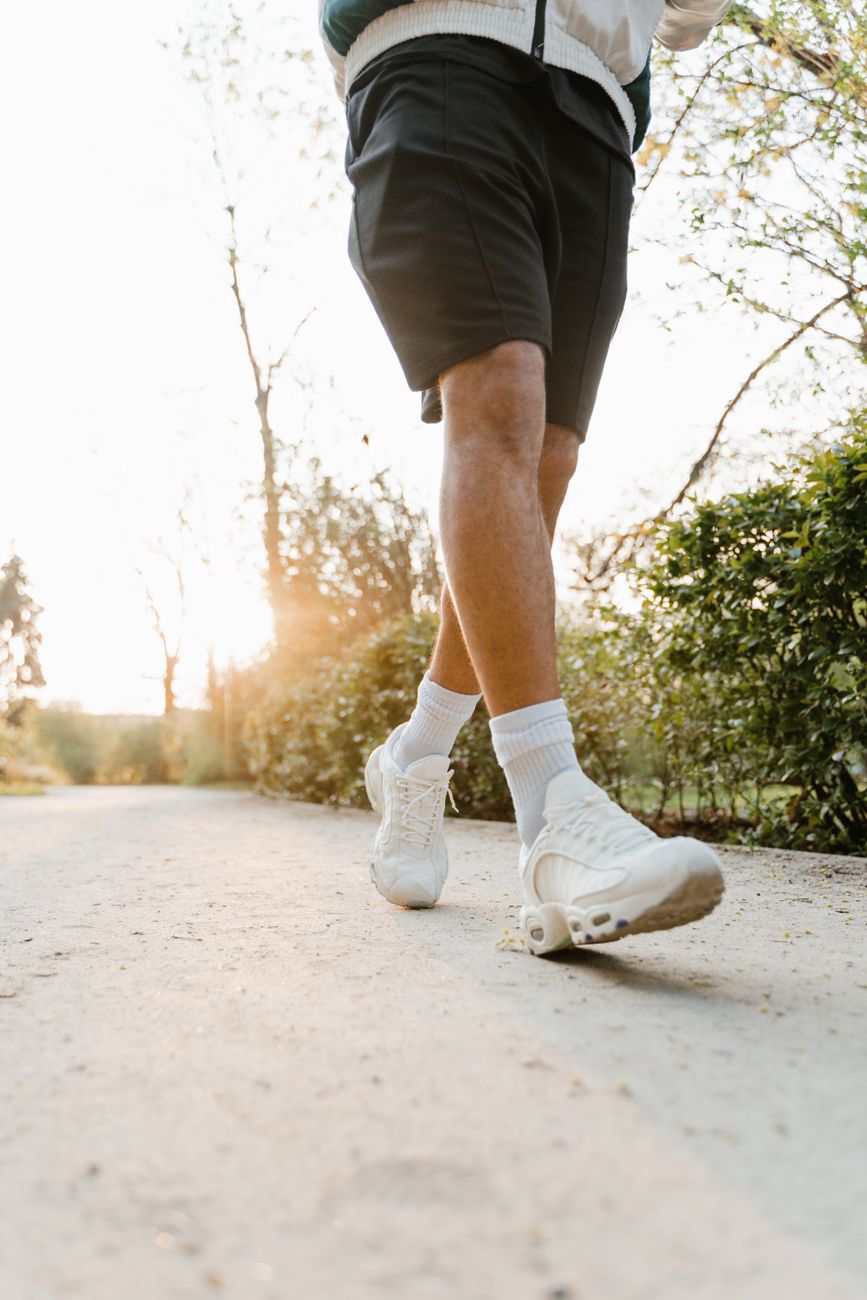
We May Be Making Exercise Too Complicated
Current physical activity guidelines recommend that adults accumulate at least 150 minutes of moderate-intensity aerobic activity each week, along with muscle-strengthening activities on at least two days (Bull et al., 2020). While these recommendations provide an excellent goal, people sometimes interpret them to mean that physical activity only matters when it occurs during a structured workout. In reality, movement accumulated throughout the day contributes to our overall physical activity. A 10-minute walk after breakfast, another after lunch, and another after dinner adds up to 30 minutes of movement without requiring a dedicated 30-minute block in your schedule.
This distinction can be especially important for people who spend much of their workday sitting. You may exercise for 30 or 45 minutes in the morning and still spend the majority of the remaining day at a desk, in meetings, driving, or sitting at home. Research increasingly recognizes sedentary behavior as an important health consideration in addition to intentional exercise. In other words, your workout matters, but what you do during the rest of your waking hours matters too.
You Don’t Have to Reach 10,000 Steps for Walking to Count
The goal of 10,000 steps per day has become so familiar that many people assume it represents a scientifically established threshold for good health. Research, however, suggests that health benefits occur well below 10,000 steps and that there is nothing magical about reaching that exact number. In a meta-analysis involving 47,471 adults from 15 international cohorts, Paluch et al. (2022) found progressively lower mortality risk as daily step counts increased. Among adults age 60 and older, the association appeared to level off around 6,000 to 8,000 steps per day, while among adults younger than 60, benefits continued to approximately 8,000 to 10,000 steps per day.
Even more recent research reinforces the idea that we do not have to chase an arbitrary step goal to improve our health. A 2025 systematic review and dose-response meta-analysis found that approximately 7,000 steps per day was associated with substantially better outcomes across several areas of health when compared with 2,000 steps per day. In that analysis, 7,000 daily steps was associated with a 47% lower risk of all-cause mortality, 25% lower risk of cardiovascular disease incidence, 14% lower risk of type 2 diabetes, 38% lower risk of dementia, and 22% lower risk of depressive symptoms (Ding et al., 2025). These are observational associations and do not prove that step count alone caused those reductions, but they provide another compelling reason to make regular movement part of everyday life.
Why Walking After a Meal Is Especially Interesting
If you are trying to decide when to fit those extra minutes of walking into your day, after a meal may be an excellent place to start. When we eat a meal containing carbohydrates, glucose enters the bloodstream, and the body releases insulin to help move glucose into cells where it can be used or stored. Physical activity allows working skeletal muscles to increase glucose uptake, which is one reason movement can be particularly helpful for metabolic health. You do not necessarily need an intense workout to take advantage of this process.
A systematic review and meta-analysis by Buffey et al. (2022) examined the effects of interrupting prolonged sitting with standing or light-intensity walking. The researchers found that light-intensity walking breaks improved postprandial glucose and insulin responses compared with prolonged sitting. This is particularly relevant because many of us do exactly the opposite after eating: we sit back down. We eat breakfast and drive to work, eat lunch and return to our desks, or eat dinner and move to the couch.
Instead of thinking that you need to complete a difficult workout after every meal, consider simply taking a short walk. Walk around your neighborhood, take the dog outside, walk on the treadmill, or take a few laps around your workplace after lunch. Even if you cannot walk for 10 minutes, a few minutes of movement is still movement. The goal is to create opportunities for your muscles to work throughout the day rather than spending hours at a time almost completely sedentary.
Walking Is About More Than Calories
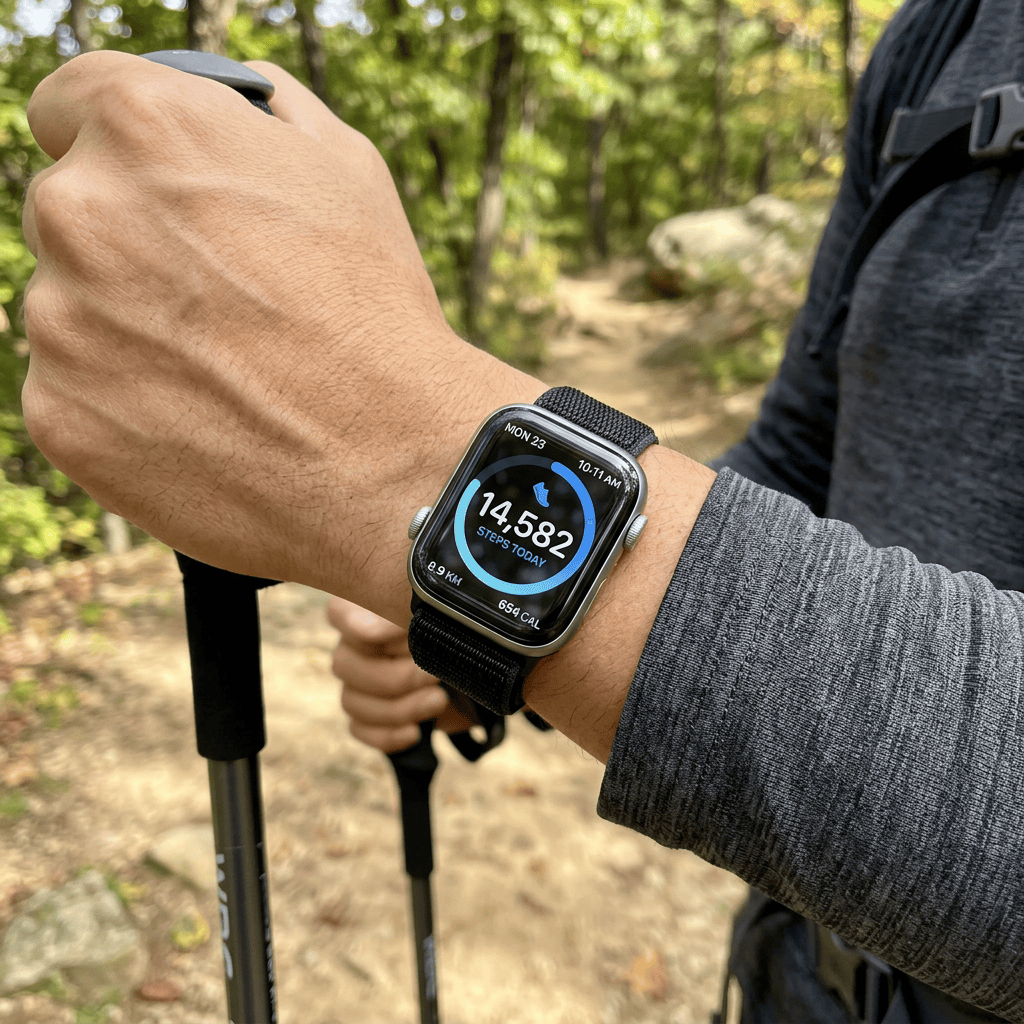
Another mistake we make with exercise is viewing movement primarily through the lens of calorie burning and weight loss. If a fitness tracker tells you that your short walk burned only a small number of calories, it can feel like the effort did not accomplish much. However, the benefits of physical activity extend far beyond the number displayed on your watch. Walking contributes to cardiovascular fitness, metabolic health, mobility, physical function, and overall daily activity.
Research examining step counts and cardiovascular outcomes provides a good example. A dose-response meta-analysis found that higher daily step counts were associated with lower risks of both all-cause mortality and cardiovascular events (Sheng et al., 2021). Among studies using accelerometers, approximately 8,959 daily steps was associated with about a 40% lower risk of all-cause mortality compared with approximately 4,183 daily steps, while approximately 9,500 steps was associated with a 35% lower risk of cardiovascular events compared with approximately 3,500 steps. Again, these observational findings demonstrate associations rather than guaranteeing an individual outcome, but they highlight that simply moving more may have benefits that extend far beyond weight management.
Make Walking Fit Into Your Life
The best movement plan is not necessarily the most intense one; it is the one you can realistically repeat. If your schedule makes a long workout difficult, look for smaller pockets of time that already exist during your day. You might walk for 10 minutes before leaving for work, use part of your lunch break to walk outside, take the stairs when appropriate, park farther away from a building, or walk while your child is at sports practice. You can also make an after-dinner family walk part of your evening routine rather than treating exercise as something that has to happen separately from family life.
Walking can also be paired with activities you already enjoy. Listen to an audiobook, podcast, or music, call a friend, pray, take your dog, or use the time to simply be outside without another screen in front of you. On days when you have more time and energy, you can walk longer or increase your pace, but those additions do not have to be requirements. Creating a low barrier to movement makes it much easier to remain consistent when life gets busy.
Start Where You Are
If you currently average 3,000 steps per day, there is no reason to suddenly demand 10,000 from yourself tomorrow. A more realistic goal might be adding one 10-minute walk to your day and seeing how that feels for a couple of weeks. Once that becomes routine, you might add another short walk, take a longer route, or gradually increase your daily step count. The research on steps and health consistently suggests that moving from very little activity toward more activity matters, even when you have not reached the numbers frequently promoted on social media or fitness trackers.
It is also important to remember that walking does not replace every other form of exercise. Strength training remains important for maintaining muscle, bone health, function, and healthy aging, while more vigorous cardiovascular activity can provide additional benefits when it is appropriate for the individual. Walking is simply one accessible piece of a well-rounded approach to movement. For people who have been inactive, have chronic medical conditions, or experience symptoms with exercise, an individualized plan should be discussed with an appropriate healthcare professional.
Ten Minutes Still Counts
We often underestimate health behaviors because they seem too small to make a difference. Ten minutes of walking does not look dramatic on social media, require expensive equipment, or leave you lying on the floor after a workout. What it can do is help break up hours of sitting, increase your daily movement, and create a behavior that is realistic enough to repeat almost every day. When you repeat that 10-minute walk consistently, it stops being a workout you have to convince yourself to do and starts becoming part of how you live.
The next time you finish a meal or realize you have been sitting for several hours, resist the urge to think that you need an entire workout for movement to be worthwhile. Put on your shoes, step outside, walk around your workplace, or get on the treadmill for 10 minutes. You do not have to hit 10,000 steps, close every ring on your watch, or break a sweat for your movement to count. Sometimes improving your health really can begin with something as simple as taking a walk.

Written By: Roxanne Oliver, DNP, APRN, FNP-BC, CHHP
*The information contained in this post is for information only. It does not replace routine follow-up and/or care with a certified and licensed medical provider
References
Buffey, A. J., Herring, M. P., Langley, C. K., Donnelly, A. E., & Carson, B. P. (2022). The acute effects of interrupting prolonged sitting time in adults with standing and light-intensity walking on biomarkers of cardiometabolic health in adults: A systematic review and meta-analysis. Sports Medicine, 52(8), 1765–1787. https://doi.org/10.1007/s40279-022-01649-4
Bull, F. C., Al-Ansari, S. S., Biddle, S., Borodulin, K., Buman, M. P., Cardon, G., Carty, C., Chaput, J.-P., Chastin, S., Chou, R., Dempsey, P. C., DiPietro, L., Ekelund, U., Firth, J., Friedenreich, C. M., Garcia, L., Gichu, M., Jago, R., Katzmarzyk, P. T., … Willumsen, J. F. (2020). World Health Organization 2020 guidelines on physical activity and sedentary behaviour. British Journal of Sports Medicine, 54(24), 1451–1462. https://doi.org/10.1136/bjsports-2020-102955
Ding, D., et al. (2025). Daily steps and health outcomes in adults: A systematic review and dose-response meta-analysis. The Lancet Public Health. https://pubmed.ncbi.nlm.nih.gov/40713949/
Paluch, A. E., Bajpai, S., Bassett, D. R., Carnethon, M. R., Ekelund, U., Evenson, K. R., Galuska, D. A., Jefferis, B. J., Kraus, W. E., Lee, I.-M., Matthews, C. E., Omura, J. D., Patel, A. V., Pieper, C. F., Rees-Punia, E., Dallmeier, D., Klenk, J., Whincup, P. H., Dooley, E. E., … Fulton, J. E. (2022). Daily steps and all-cause mortality: A meta-analysis of 15 international cohorts. The Lancet Public Health, 7(3), e219–e228. https://doi.org/10.1016/S2468-2667(21)00302-9
Sheng, M., Yang, J., Bao, M., Chen, T., Cai, R., Zhang, N., Chen, H., Liu, M., Wu, X., Zhang, B., & Liu, Y. (2021). The relationships between step count and all-cause mortality and cardiovascular events: A dose-response meta-analysis. Journal of Sport and Health Science, 10. https://doi.org/10.1016/j.jshs.2021.09.004
Want to Learn More?
Want more practical, evidence-based information about nutrition, functional medicine, hormones, healthy living, and wellness? Follow along on Instagram and TikTok @roxanneoliver_dnp, where I share education, healthy lifestyle tips, recipes, and realistic ways to support your health. I believe wellness should be understandable, sustainable, and something you can actually incorporate into real life.

