
There is something about September that makes me want everything to taste like fall. Naturally, this weekend’s meal prep somehow ended up including Gluten-Free Protein Pumpkin Bread made in my bread machine. Was pumpkin bread absolutely necessary? Probably not. Did it feel necessary because the weather is changing and I am officially feeling “fallish”? Absolutely.
That little addition to the menu is actually a perfect example of why I love meal prepping. Meal prep sometimes gets a reputation for being rows of identical containers filled with chicken, broccoli, and rice that you dutifully eat for five days straight. That is definitely not what happens in my house, nor do I think it needs to be.
I meal prep because our weeks are busy. Between work, homeschooling, practices, games, appointments, and everything else that comes with raising a family, I know that 5:30 p.m. on a busy weekday is a terrible time to start asking, “What should we have for dinner?” I want nutritious food to be the easy choice, but I also want our food to taste good, have variety, and actually be something my family wants to eat.
Most importantly, I leave room for the plan to change.
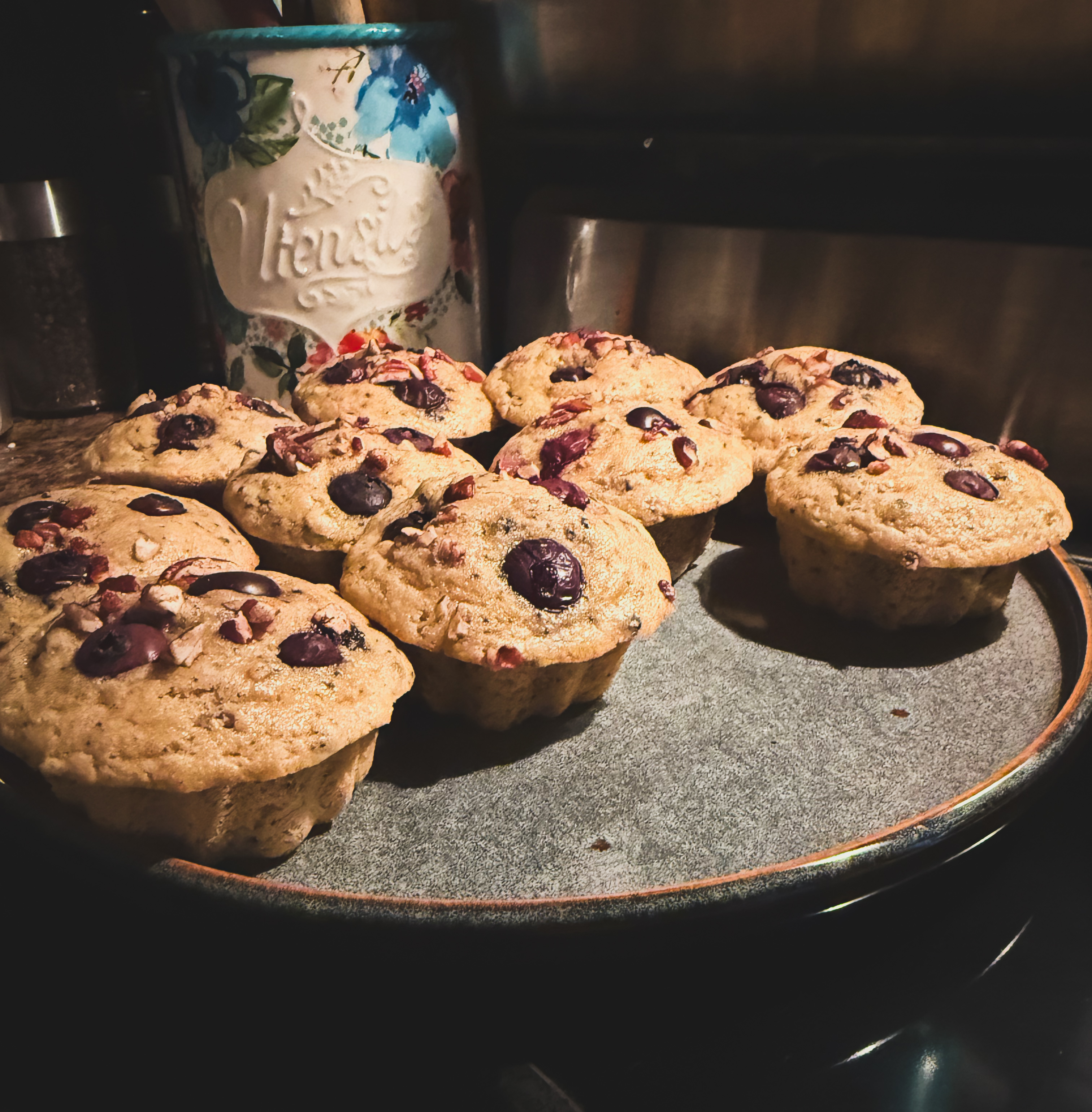
This Week’s Meal Prep
Originally, I planned to make blueberry chicken breakfast sausage patties this week. I had the recipe planned, and I knew what ingredients I needed. Then, as I started thinking about meal prep, chicken Gouda crustless quiche sounded better. So, that is what I made instead.
This is your reminder that the meal plan is not the boss of you. Sometimes something else sounds better. Sometimes your husband or kids request something different. Sometimes you open the refrigerator and realize there is something you really need to use before it becomes a science experiment. Whatever the reason, it is perfectly fine to change the plan.
The goal of meal prep is not perfection. The goal is to make your week easier while helping you stay consistent with the way you want to eat.
This week, I wanted several breakfast choices available instead of preparing one breakfast and eating it every morning. We have the chicken Gouda crustless quiche, chia pudding, protein shakes, and now my Gluten-Free Protein Pumpkin Bread. Having several options gives us structure without making anyone feel like they are eating the exact same thing every day.
I use the same approach with our dinners. Over the next couple of weeks, I planned a mixture of proteins, vegetables, soups, slow-cooker meals, and family favorites. Instead of relying on chicken every night because it is easy, I intentionally rotate chicken, turkey, pork, beef, salmon, and shrimp. That variety helps keep everyone interested while also giving us a broader range of nutrients.
Since we are also getting ready to leave for our cruise, the end of my meal plan becomes very intentional. I purposely schedule leftover nights and freezer or pantry meals before we travel. I have absolutely no desire to leave behind a refrigerator full of vegetables slowly dying while I am on a cruise.
Why Meal Prep Can Help With Weight-Loss Goals
There is actually research supporting some of the benefits of meal planning. In a large observational study involving more than 40,000 adults, meal planning was associated with better overall diet quality, greater food variety, and lower odds of obesity. Because this was an observational study, it cannot prove that meal planning itself caused those outcomes, but the association is still interesting and supports what many people experience when they begin planning their food more intentionally.
For me, one of the biggest benefits is even simpler: meal prep allows me to make many of my food decisions at a time when I am not exhausted, starving, and standing in front of the refrigerator. Instead of trying to decide what to eat after a long day, I have already narrowed down my choices and made sure the ingredients are available.
“For me, one of the biggest benefits is even simpler: meal prep allows me to make many of my food decisions at a time when I am not exhausted, starving, and standing in front of the refrigerator.“
You may have heard this described as reducing “decision fatigue.” Research specifically connecting decision fatigue and food choices is still developing, so I do not think we should oversell the concept. However, there is evidence suggesting that decision fatigue may contribute to more impulsive and less health-conscious food choices in certain situations. From a practical standpoint, planning ahead simply reduces the number of decisions you have to make when you are tired and hungry.
Instead of asking, “What sounds good right now?” meal prep allows you to ask, “Which of the things I already planned sounds good right now?” That may seem like a small distinction, but it can make healthy eating much easier to maintain.
Meal planning also gives you the opportunity to intentionally create variety. When I look at our entire menu before grocery shopping, I can quickly see whether I have somehow planned chicken six nights in a row or forgotten vegetables for half the meals. I can rotate proteins, vegetables, flavors, and cooking methods before I ever get to the grocery store.
For weight loss and long-term weight maintenance, sustainability matters. A nutrition plan that is so restrictive that you dread eating your meals is probably not going to work very well over the long term. Meal prep is not magic, and putting food into matching glass containers on Sunday does not somehow cause weight loss. What meal prep can do is make the behaviors that support your goals easier to repeat consistently.
Consistency is ultimately much more important than having a “perfect” week.
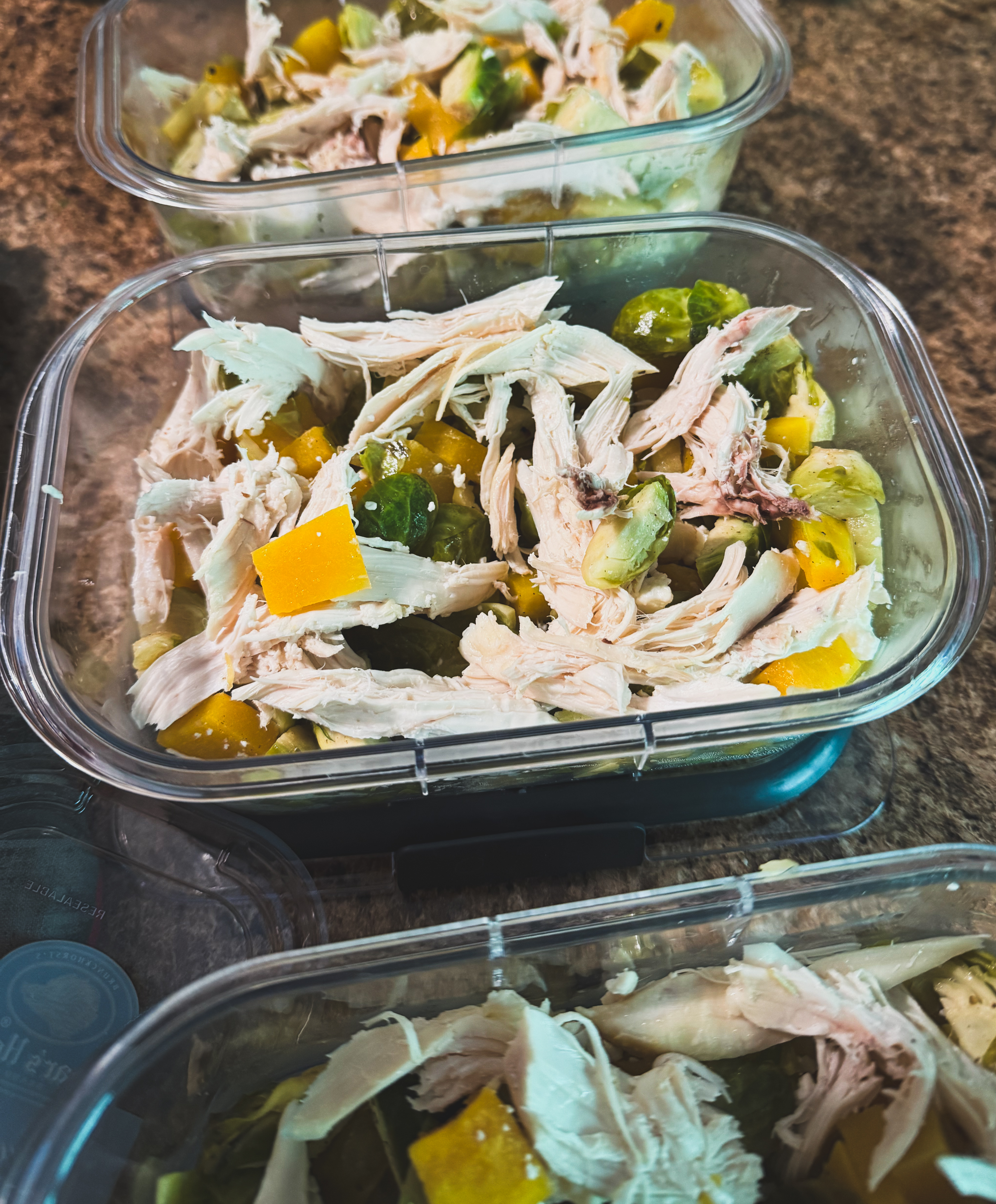
10 Things I Am Doing With This Week’s Meal Prep
1. Prep components instead of preparing every meal in individual containers. You do not have to assemble 14 perfectly portioned meals to successfully meal prep. Having cooked protein, chopped vegetables, prepared breakfast foods, sauces, and a few freezer meals ready can sometimes be more useful because everyone can mix and match throughout the week.
2. Give yourself breakfast choices. I like having several breakfast options available rather than assigning a specific breakfast to each day. This week, we have chicken Gouda crustless quiche, chia pudding, protein shakes, and pumpkin bread. I still have structure, but I can choose what sounds good that morning.
3. Use freezer bags for future dinners. Several meals on our menu can be assembled ahead of time so that most of the work is already finished on the day we eat them. Soups, chili, carnitas, and many slow-cooker chicken dishes work especially well for this. Future me is always ridiculously grateful to Sunday meal-prep me.
4. Rotate your proteins. I intentionally included chicken, turkey, beef, pork, salmon, and shrimp in this meal plan. Protein is an important part of our meals, but eating the same protein prepared the same way every night gets boring quickly. Variety keeps meals interesting and provides a broader range of nutrients.
5. Plan meals around your actual calendar. A night packed with work, practices, games, and activities is probably not the best night to schedule a dinner that requires 45 minutes of chopping and three pans. Those nights get the slow cooker, a freezer meal, leftovers, or something intentionally simple. Meal prep should fit your life; your life should not have to fit your meal prep.
6. Make your options visible. I keep our weekly menu where the family can see it, and I make sure breakfast, lunch, and snack options are clearly listed. This helps everyone know what is available without having to ask me. Apparently, opening a refrigerator full of food, staring directly at it, and announcing, “We have nothing to eat,” is still a developmental milestone in childhood.
7. Intentionally plan for leftovers. Leftovers are not a meal-prep failure. They are part of my plan because they save money, reduce food waste, and give me a night when I do not have to cook another complete meal. I consider that a win on all three counts.
8. Plan backward when you are traveling. Because we are leaving for vacation soon, I am intentionally using our perishable foods first and transitioning toward freezer and pantry foods as we get closer to leaving. The week before a vacation is probably not the time to enthusiastically purchase seven avocados and a refrigerator drawer full of produce.
9. Leave room for something fun. This week, that something was Gluten-Free Protein Pumpkin Bread. Nutrition does not have to be boring to be intentional. Seasonal foods, comfort foods, and family favorites can absolutely have a place in an overall healthy lifestyle.
10. Change the plan when the plan no longer works. My blueberry chicken sausage became chicken Gouda crustless quiche, and nothing terrible happened. In fact, I am pretty happy about the change. A meal plan is supposed to serve you, not become another set of rules you feel obligated to follow.
Meal Prep Is a Tool, Not a Rule
One of the biggest reasons I continue to meal prep is that it gives me structure without requiring perfection. I know what we are eating, I grocery shop with a purpose, and I can intentionally include plenty of protein and variety. I can also prepare ahead for our busiest evenings, reduce food waste, and eliminate some of the daily mental load surrounding food.
At the same time, there is still room to decide that chicken Gouda quiche sounds better than blueberry chicken sausage. There is room for pumpkin bread because it is September and I am feeling fallish. There is room for leftovers, family requests, changing schedules, and nights when life simply does not go according to plan.
If you are trying to lose weight, improve your nutrition, save money, or simply stop ordering dinner because nobody knows what to make, you do not need to meal prep every bite of food you will eat for the next seven days. Start smaller by planning your dinners, preparing one or two breakfast options, keeping a few protein-forward snacks available, and prepping ahead for the meals that fall on your busiest nights.
Then, adjust as you go. Your meal plan does not have to be perfect to be helpful, and neither does your nutrition. The best meal plan is not the one that looks perfect sitting on your kitchen counter on Sunday afternoon. It is the one that still makes your life easier when Wednesday night rolls around and everyone is hungry.
For more helpful tips, check out my TikTok page at: https://www.tiktok.com/@roxanneoliver_dnp?_r=1&_t=ZT-99teCRlA4iM

This Week’s Recipes
Here are a few of the recipes I prepped this week. Macros are approximate and will vary depending on the specific brands, portions, and substitutions you use.
Chicken Gouda Crustless Quiche
Approximate macros per serving: 250 calories | 25 g protein | 5 g carbohydrates | 14 g fat
Ingredients: 1 pound ground chicken, 8 large eggs, 1 cup cottage cheese, 1 cup shredded Gouda cheese, 1 cup chopped spinach, ½ teaspoon garlic powder, ½ teaspoon onion powder, salt, and black pepper.
Instructions: Brown the chicken in a skillet and drain if necessary. Whisk together the eggs, cottage cheese, seasonings, and half of the Gouda. Stir in the cooked chicken and spinach, pour into a greased pie dish, and top with the remaining Gouda. Bake at 375°F for approximately 30–35 minutes, or until the center is set. Allow it to rest before slicing.
Gluten-Free Protein Pumpkin Bread — Bread Machine
Approximate macros per slice: 150 calories | 7 g protein | 16 g carbohydrates | 7 g fat
Ingredients: 1 cup pumpkin puree, 3 eggs, ½ cup plain Greek yogurt, 2 tablespoons melted butter or avocado oil, 2 tablespoons honey or monk fruit to taste, 1 teaspoon vanilla, 1 cup oat flour, 1 cup almond flour, 1 teaspoon baking powder, ½ teaspoon baking soda, 1½ teaspoons cinnamon, ½ teaspoon pumpkin pie spice, and ¼ teaspoon salt.
Instructions: Add the wet ingredients to the bread-machine pan first, followed by the dry ingredients. Use the machine’s quick bread or cake setting rather than a yeast-bread cycle. Check during mixing and scrape the sides if needed. Allow the bread to cool before slicing.
White Chicken Chili
Approximate macros per serving: 330 calories | 35 g protein | 28 g carbohydrates | 9 g fat
Ingredients: 1½ pounds chicken breast, 2 cans Great Northern or cannellini beans, 1 can diced green chiles, 1 small onion, 3 cups chicken broth, 1 teaspoon cumin, 1 teaspoon chili powder, ½ teaspoon garlic powder, 4 ounces cream cheese, and salt and pepper.
Instructions: Add everything except the cream cheese to a slow cooker and cook on low for 6–7 hours or high for 3–4 hours. Shred the chicken, stir in the cream cheese, and cook until creamy and heated through.
Turkey Taco Soup
Approximate macros per serving: 300 calories | 28 g protein | 27 g carbohydrates | 9 g fat
Ingredients: 1 pound lean ground turkey, 1 can black beans, 1 can diced tomatoes, 1 can diced green chiles, 1 cup corn if desired, 3 cups chicken broth, 1 small onion, and 2 tablespoons taco seasoning.
Instructions: Brown the turkey and onion, then add them to a slow cooker with the remaining ingredients. Cook on low for 4–6 hours. Serve with avocado, shredded cheese, plain Greek yogurt, or your favorite taco toppings.
BBQ Chicken Stuffed Sweet Potatoes
Approximate macros per serving: 390 calories | 34 g protein | 44 g carbohydrates | 9 g fat
Ingredients: 4 medium sweet potatoes, 1½ pounds chicken breast, ½ cup lower-sugar BBQ sauce, ½ teaspoon garlic powder, salt, pepper, and optional shredded cheese.
Instructions: Bake the sweet potatoes until tender. Cook and shred the chicken, then toss it with the BBQ sauce and seasonings. Split each sweet potato and fill with BBQ chicken. Add a small amount of cheese or other toppings if desired.
Slow-Cooker Pork Carnitas
Approximate macros per serving: 310 calories | 34 g protein | 5 g carbohydrates | 17 g fat
Ingredients: 2½ pounds pork shoulder, juice of 1 lime, ½ cup chicken broth, 1 small onion, 3 garlic cloves, 1 teaspoon cumin, 1 teaspoon oregano, 1 teaspoon chili powder, ½ teaspoon salt, and black pepper.
Instructions: Add everything to the slow cooker and cook on low for 8 hours or until the pork easily shreds. Shred the meat and toss it in some of the cooking juices. For crispy edges, spread the pork on a sheet pan and broil for a few minutes before serving.
Fall Harvest Chicken
Approximate macros per serving: 375 calories | 37 g protein | 30 g carbohydrates | 12 g fat
Ingredients: 1½ pounds chicken breast or thighs, 2 small sweet potatoes, 2 cups Brussels sprouts, 1 apple, 1 tablespoon olive oil, 1 teaspoon cinnamon, ½ teaspoon thyme, ½ teaspoon garlic powder, salt, and pepper.
Instructions: Chop everything into bite-size pieces and toss with the olive oil and seasonings. Roast on a sheet pan at 400°F for approximately 25–30 minutes, or until the chicken reaches 165°F and the vegetables are tender.
Turkey Meatloaf Muffins
Approximate macros per 2 muffins: 280 calories | 31 g protein | 12 g carbohydrates | 11 g fat
Ingredients: 1½ pounds lean ground turkey, 1 egg, ½ cup gluten-free oats, ¼ cup milk, ½ small onion finely diced, 1 teaspoon garlic powder, 1 teaspoon Italian seasoning, salt, pepper, and a small amount of ketchup or lower-sugar tomato sauce for the tops.
Instructions: Combine the ingredients without overmixing. Divide into a greased muffin pan and add a small amount of tomato sauce to each. Bake at 375°F for approximately 20–25 minutes, or until the centers reach 165°F.
Garlic Butter Shrimp & Vegetable Skillet
Approximate macros per serving: 260 calories | 30 g protein | 10 g carbohydrates | 11 g fat
Ingredients: 1½ pounds peeled shrimp, 2 tablespoons butter, 3 garlic cloves, 1 zucchini, 1 bell pepper, 1 cup broccoli, ½ teaspoon Italian seasoning, salt, pepper, and fresh lemon juice.
Instructions: Sauté the vegetables in half of the butter until just tender. Add the remaining butter, garlic, shrimp, and seasonings. Cook until the shrimp are pink and opaque, then finish with fresh lemon juice.
Beef Tips & Gravy
Approximate macros per serving: 350 calories | 38 g protein | 10 g carbohydrates | 17 g fat
Ingredients: 2 pounds sirloin or stew beef, 2 cups beef broth, 1 small onion, 8 ounces mushrooms, 2 garlic cloves, 1 tablespoon Worcestershire sauce, 1 teaspoon thyme, salt, pepper, and a cornstarch slurry if needed.
Instructions: Add the beef, broth, onion, mushrooms, garlic, Worcestershire sauce, and seasonings to the slow cooker. Cook on low for 6–8 hours until tender. Thicken the cooking liquid at the end if desired and serve with your favorite vegetable or mashed potatoes.
Easy Baked Salmon
Approximate macros per 5-ounce serving: 300 calories | 32 g protein | 2 g carbohydrates | 18 g fat
Ingredients: 4 salmon fillets, 1 tablespoon olive oil, garlic powder, dill, salt, black pepper, and fresh lemon.
Instructions: Place the salmon on a lined baking sheet, brush lightly with olive oil, and season. Bake at 400°F for approximately 12–15 minutes, depending on thickness. Finish with fresh lemon and serve with vegetables or a simple salad.
A quick note about the macros: These numbers are estimates intended to make meal planning easier, not exact nutritional calculations. Ingredient brands, portion sizes, toppings, cooking methods, and substitutions can significantly change the final nutrition information.

Written By: Roxanne Oliver, DNP, APRN, FNP-BC, CHHP
*The information contained in this post is for information only. It does not replace routine follow-up and/or care with a certified and licensed medical provider
References
Brasington, N., Beckett, E. L., Pristijono, P., & Akanbi, T. O. (2025). The effect of decision fatigue on food choices: A narrative review. Nutrients, 17(24), 3901. https://doi.org/10.3390/nu17243901
Ducrot, P., Méjean, C., Aroumougame, V., Ibanez, G., Allès, B., Kesse-Guyot, E., Hercberg, S., & Péneau, S. (2017). Meal planning is associated with food variety, diet quality and body weight status in a large sample of French adults. International Journal of Behavioral Nutrition and Physical Activity, 14, Article 12. https://doi.org/10.1186/s12966-017-0461-7
 Roxy Functional Wellness