When most people think about healthy aging, they probably picture something that becomes important in their 60s or 70s. We tend to associate conversations about muscle loss, balance, falls, and maintaining independence with older adults rather than people in their 30s and 40s. However, the foundation for how we age is being built much earlier than we may realize. One of the most important things we can do now to support our future health is to protect and build skeletal muscle.
For years, exercise conversations have been dominated by weight loss and calorie burning, especially for women. We have been taught to ask how many calories a workout burned or whether a particular exercise will help us lose weight, but exercise provides benefits that extend far beyond the scale. Maintaining muscle supports strength, mobility, metabolic health, bone health, and our ability to continue doing everyday activities as we get older. Instead of viewing muscle as something that matters primarily to athletes or bodybuilders, it may be more helpful to think of it as an important part of our long-term health.
We Do Not Maintain Muscle Automatically
Muscle mass changes throughout the lifespan, and maintaining it becomes increasingly important as we age. Research suggests that muscle mass and strength generally peak in early adulthood before gradually declining later in life, although the timing and rate of decline vary among individuals (Larsson et al., 2019). This decline can eventually contribute to sarcopenia, a condition characterized by progressive loss of skeletal muscle strength, quantity, or quality. Sarcopenia is particularly concerning in older adulthood because it is associated with impaired physical function, falls, loss of independence, and other adverse health outcomes.
The good news is that age-related muscle decline is not entirely outside of our control. Physical activity, resistance training, nutrition, illness, hormonal changes, and other lifestyle and medical factors can influence muscle health across the lifespan. This is one reason waiting until our 70s to think about strength may not be the best strategy. Building and maintaining muscle earlier gives us more reserve as we move through the decades ahead.
Muscle Is About Much More Than Looking “Toned”
Skeletal muscle is sometimes discussed as though its primary purpose is changing how our bodies look. In reality, muscle is a metabolically active tissue that plays important roles in movement, glucose metabolism, energy balance, and overall metabolic health. Skeletal muscle is a major site of insulin-stimulated glucose disposal, which helps explain why muscle health and physical activity are closely connected with glucose regulation (Merz & Thurmond, 2020). Building muscle is therefore not simply an aesthetic goal; it can be part of supporting metabolic health.
Muscle also allows us to perform the ordinary activities we often take for granted. Carrying groceries, lifting luggage into an overhead compartment, getting up from the floor, climbing stairs, carrying a child, doing yard work, hiking, and maintaining balance all require strength. The goal of strength training is not necessarily to become the strongest person in the gym. For many of us, the more meaningful goal is being strong enough to continue participating fully in our lives as we age.
Strength Matters Even When the Scale Does Not Change
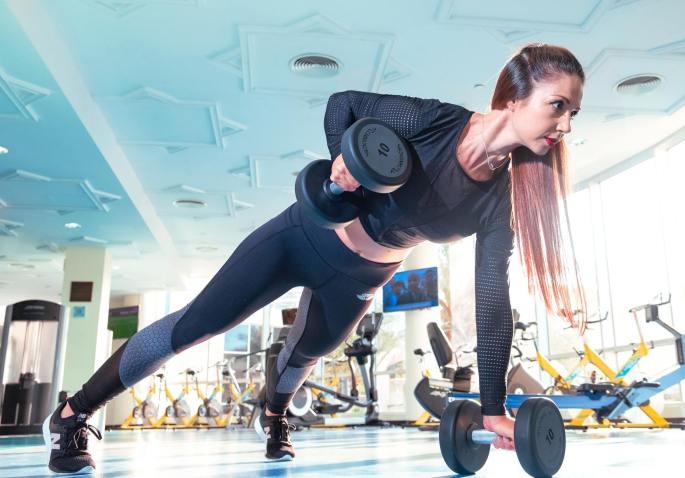
One of the reasons people become discouraged with strength training is that they are watching the wrong measurement. If you begin resistance training and the number on the scale does not move quickly, it can feel as though your effort is not working. However, body weight alone tells us very little about changes in strength, muscle mass, cardiovascular fitness, metabolic health, or physical function. A person can improve their health significantly without seeing a dramatic change in total body weight.
Research strongly supports resistance training as an effective strategy for increasing muscular strength and improving physical function. A large systematic review and meta-analysis found that resistance training was associated with reductions in body-fat percentage, fat mass, and visceral fat among healthy adults (Wewege et al., 2022). This does not mean that everyone who begins lifting weights will experience significant weight loss, nor should that be the only goal. Instead, it demonstrates that resistance training can positively affect body composition even when the bathroom scale does not tell the entire story.
Strong Muscles and Strong Bones Are Connected
Muscle is only part of the healthy-aging conversation because our bones also require attention. Bone tissue responds to mechanical loading, which is one reason weight-bearing activity and resistance exercise are frequently recommended as part of a bone-healthy lifestyle. This becomes increasingly important for women as they approach and move through menopause, when declining estrogen contributes to accelerated bone loss. Building strength earlier in adulthood can therefore support both muscular and skeletal health as we age.
Research supports resistance and impact exercise for improving or preserving bone mineral density in postmenopausal women. A systematic review and meta-analysis by Shojaa et al. (2020) found that dynamic resistance exercise produced positive effects on bone mineral density at clinically relevant skeletal sites in postmenopausal women. The exact exercise prescription matters, and people with osteoporosis, previous fractures, or significant medical conditions may require individualized recommendations. However, the broader message remains important: our bones, like our muscles, benefit from being appropriately challenged.
Protein Becomes Part of the Conversation
Exercise provides the stimulus for muscle adaptation, but nutrition provides the building materials. Protein supplies amino acids needed for muscle protein synthesis and tissue repair, making adequate protein intake an important component of maintaining muscle. Protein needs vary based on age, body size, activity level, health status, and individual goals, so there is no single protein target that is appropriate for everyone. However, people who exercise regularly and individuals trying to preserve muscle during aging may benefit from protein intakes above the basic Recommended Dietary Allowance in some circumstances.
A position stand from the International Society of Sports Nutrition concluded that approximately 1.4 to 2.0 grams of protein per kilogram of body weight per day is sufficient for most exercising individuals seeking to build or maintain muscle (Jäger et al., 2017). Older adults are also an important population because aging muscle may respond less robustly to smaller protein doses, a phenomenon sometimes described as anabolic resistance. Recommendations from the PROT-AGE Study Group have suggested approximately 1.0 to 1.2 grams of protein per kilogram per day for many healthy older adults, with higher amounts potentially appropriate for some individuals depending on activity and health status (Bauer et al., 2013). People with certain medical conditions, particularly kidney disease, should discuss individualized protein goals with their healthcare professional rather than simply adopting a high-protein diet.
You Do Not Need to Live at the Gym
The idea of strength training can feel intimidating if you picture heavy barbells, complicated machines, or spending an hour in the gym every day. In reality, resistance training can include dumbbells, resistance bands, weight machines, body-weight exercises, or other forms of progressively challenging the muscles. The current U.S. Physical Activity Guidelines recommend that adults perform muscle-strengthening activities involving the major muscle groups on at least two days each week (U.S. Department of Health and Human Services [HHS], 2018). For many people, two or three thoughtfully planned strength sessions each week can be a realistic place to begin.
The key word is progressive. If you always perform exactly the same exercise with exactly the same resistance, your body has less reason to adapt over time. Gradually increasing resistance, repetitions, range of motion, or exercise difficulty can provide the continued challenge necessary to build strength. Progress should still occur at an appropriate pace, particularly for beginners or anyone managing injuries or chronic medical conditions.
Start Training for the Life You Want at 70
One of my favorite ways to think about exercise is to stop asking only what it can do for my body today and start asking what I want my body to be able to do decades from now. Do you want to travel, hike, garden, play with grandchildren, carry your own groceries, get down on the floor and stand back up, or remain independent in your own home? Those activities require a combination of strength, balance, mobility, cardiovascular fitness, and confidence. The abilities we hope to have later in life are worth practicing and protecting now.
Research has repeatedly demonstrated a relationship between muscular strength and long-term health outcomes. In a meta-analysis of prospective cohort studies, higher muscular strength was associated with a lower risk of all-cause mortality in adults, although observational studies cannot establish that strength alone causes longer life (García-Hermoso et al., 2018). Grip strength has also become widely studied as a marker of overall health and physical function. These findings do not mean we need to obsess over strength numbers, but they reinforce the idea that physical strength is relevant to much more than athletic performance.
You Are Not Too Old, and It Is Not Too Early
If you are in your 30s or 40s, healthy aging may feel like something you can worry about later. However, the habits you develop now can influence the physical reserve you carry into your 50s, 60s, 70s, and beyond. Building muscle today is not about fearing aging or trying to prevent every physical change that comes with getting older. It is about giving your future self the best opportunity to remain strong, capable, and independent.
If you are already in your 50s, 60s, or beyond and have not been strength training, that does not mean you missed your opportunity. Older adults can still improve strength and physical function through appropriately prescribed resistance exercise, and benefits have been demonstrated even among very old adults (Fragala et al., 2019). Start at a level appropriate for your current abilities, learn proper technique, and gradually progress as your strength improves. The goal is not to compete with the person beside you; it is to become stronger than the version of yourself who started.
For too long, many of us have approached exercise primarily as a way to make our bodies smaller. Perhaps it is time to shift that perspective and ask how we can make our bodies stronger, more resilient, and better prepared for the life ahead. The number on the scale may change, or it may not, but being able to lift, carry, climb, travel, play, and live independently has value that cannot be measured in pounds. Healthy aging does not suddenly begin at 65; we are building it with the choices we make today.

Written By: Roxanne Oliver, DNP, APRN, FNP-BC, CHHP
*The information contained in this post is for information only. It does not replace routine follow-up and/or care with a certified and licensed medical provider
References
Bauer, J., Biolo, G., Cederholm, T., Cesari, M., Cruz-Jentoft, A. J., Morley, J. E., Phillips, S., Sieber, C., Stehle, P., Teta, D., Visvanathan, R., Volpi, E., & Boirie, Y. (2013). Evidence-based recommendations for optimal dietary protein intake in older people: A position paper from the PROT-AGE Study Group. Journal of the American Medical Directors Association, 14(8), 542–559. https://doi.org/10.1016/j.jamda.2013.05.021
Fragala, M. S., Cadore, E. L., Dorgo, S., Izquierdo, M., Kraemer, W. J., Peterson, M. D., & Ryan, E. D. (2019). Resistance training for older adults: Position statement from the National Strength and Conditioning Association. Journal of Strength and Conditioning Research, 33(8), 2019–2052. https://doi.org/10.1519/JSC.0000000000003230
García-Hermoso, A., Cavero-Redondo, I., Ramírez-Vélez, R., Ruiz, J. R., Ortega, F. B., Lee, D.-C., & Martínez-Vizcaíno, V. (2018). Muscular strength as a predictor of all-cause mortality in an apparently healthy population: A systematic review and meta-analysis of data from approximately 2 million men and women. Archives of Physical Medicine and Rehabilitation, 99(10), 2100–2113.e5. https://doi.org/10.1016/j.apmr.2018.01.008
Jäger, R., Kerksick, C. M., Campbell, B. I., Cribb, P. J., Wells, S. D., Skwiat, T. M., Purpura, M., Ziegenfuss, T. N., Ferrando, A. A., Arent, S. M., Smith-Ryan, A. E., Stout, J. R., Arciero, P. J., Ormsbee, M. J., Taylor, L. W., Wilborn, C. D., Kalman, D. S., Kreider, R. B., Willoughby, D. S., … Antonio, J. (2017). International Society of Sports Nutrition position stand: Protein and exercise. Journal of the International Society of Sports Nutrition, 14, 20. https://doi.org/10.1186/s12970-017-0177-8
Larsson, L., Degens, H., Li, M., Salviati, L., Lee, Y. I., Thompson, W., Kirkland, J. L., & Sandri, M. (2019). Sarcopenia: Aging-related loss of muscle mass and function. Physiological Reviews, 99(1), 427–511. https://doi.org/10.1152/physrev.00061.2017
Merz, K. E., & Thurmond, D. C. (2020). Role of skeletal muscle in insulin resistance and glucose uptake. Comprehensive Physiology, 10(3), 785–809. https://doi.org/10.1002/cphy.c190029
Shojaa, M., von Stengel, S., Schoene, D., Kohl, M., Barone, G., Bragonzoni, L., Dallolio, L., Marini, S., Murphy, M. H., Stephenson, A., Mänty, M., Ryg, J., Klenk, J., Becker, C., Todd, C., Skelton, D. A., & Kemmler, W. (2020). Effect of exercise training on bone mineral density in post-menopausal women: A systematic review and meta-analysis of intervention studies. Frontiers in Physiology, 11, 652. https://doi.org/10.3389/fphys.2020.00652
U.S. Department of Health and Human Services. (2018). Physical activity guidelines for Americans (2nd ed.). U.S. Department of Health and Human Services.
Wewege, M. A., Desai, I., Honey, C., Coorie, B., Jones, M. D., Clifford, B. K., Leake, H. B., & Hagstrom, A. D. (2022). The effect of resistance training in healthy adults on body fat percentage, fat mass and visceral fat: A systematic review and meta-analysis. Sports Medicine, 52(2), 287–300. https://doi.org/10.1007/s40279-021-01562-2
Want to Learn More?
Want more practical, evidence-based information about nutrition, functional medicine, hormones, healthy living, and wellness? Follow along on Instagram and TikTok @roxanneoliver_dnp, where I share education, healthy lifestyle tips, recipes, and realistic ways to support your health. I believe wellness should be understandable, sustainable, and something you can actually incorporate into real life.